How to Download Software on Mac Os X Updated
How to Download Software on Mac Os X
How to Install Applications on Your Mac
Posted on March 23rd, 2021 past and Kirk McElhearn 
Installing new apps on your Mac should be straightforward. Yet, information technology can sometimes be disruptive – installation methods are varied, and you'll occasionally see scary warnings. In this article, we'll prove you the various ways you tin install apps on Mac, and tell you about the warnings you may encounter.
How to install apps from the Mac App Shop
The Mac App Store is one of the best ways to go and install apps on your Mac. Information technology has its pros and cons, just for ease of utilise, it gets the highest rating.
Select App Store from the Apple tree card and the Mac App Store volition open. When signed in with your Apple ID, you can download apps: click Get and then install app for a free app, or one with in-app purchases, or click the price label for a paid one. In-app purchases are indicated next to the Get button, if there are any. You lot'll need to confirm payment by inbound your Apple tree ID/countersign.
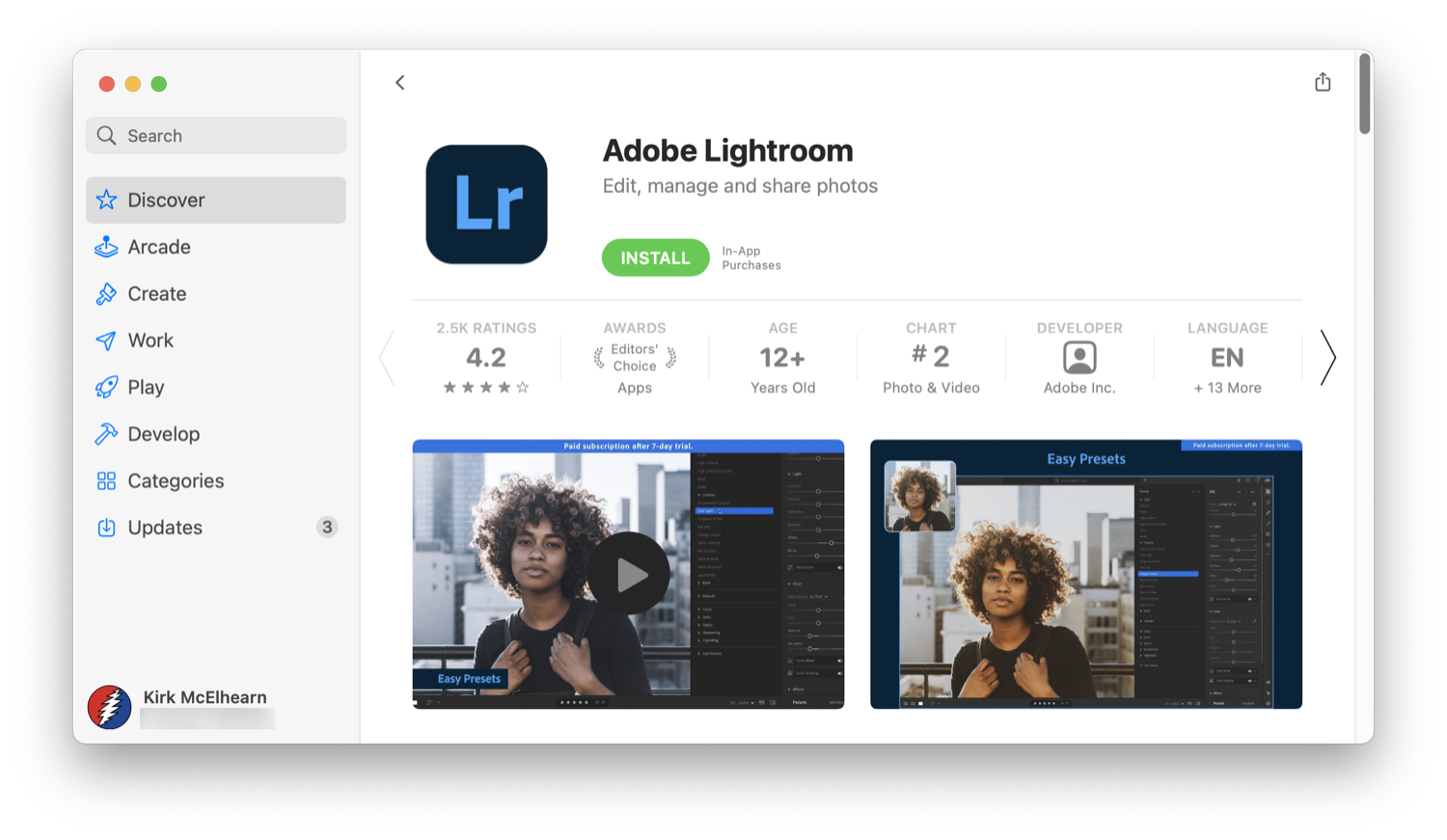
Apple reviews every Mac App Store app (and update) prior to release, minimizing the likelihood of problems.
The App Store is as well a great fashion to centralize your app updates. In System Preferences > Software Update, you can choose to accept App Store updates installed automatically.
How to install Mac apps downloaded from third-party websites
Apple imposes limitations on developers, meaning some cannot – or choose not to – release their apps on the Mac App Store. Reasoning varies from a lack of deep system access for utilities to app creators wanting the ability to immediately issue updates rather than having them await Mac App Store review.
If you decide to download app installers from the Net, only do so from reputable sources. Ideally, download from programmer websites (like Intego's) and non from app listing websites.
Unless y'all've changed your browser's settings, downloaded installers will be sent to ~/Downloads, and they come in a variety of forms:
DMG files are mountable disk images. When you lot double click a DMG file, a Finder window opens. DMGs may contain an installer that itself must be opened, afterward which point you follow on-screen instructions. Well-nigh, though, simply comprise a re-create of the app.
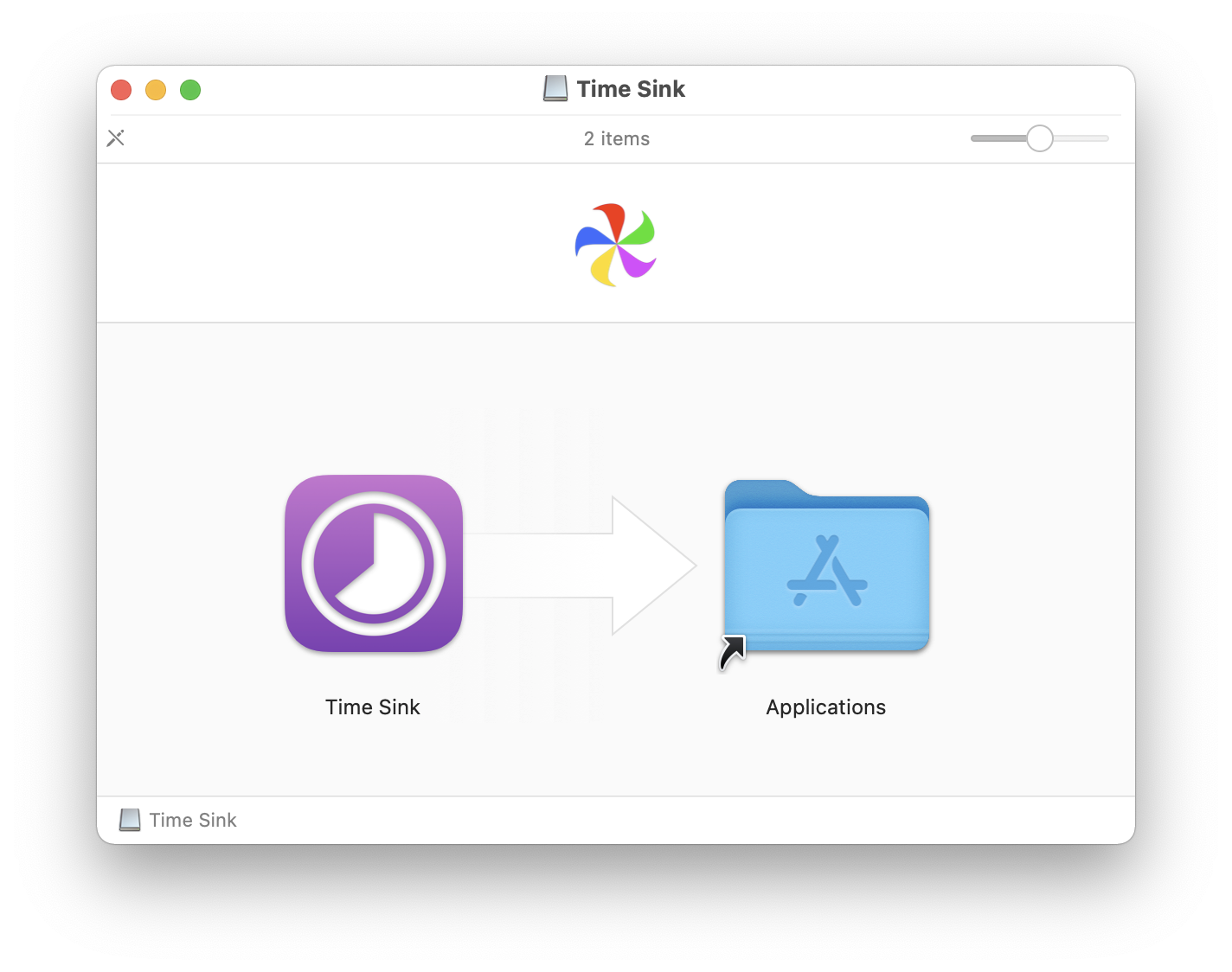
Do not run the app from inside the DMG – instead drag it to your Applications binder. A folder shortcut may exist provided to make this easier. When yous're washed, unmount the DMG by clicking the eject icon next to its proper noun in the Finder sidebar, or past Ctrl-clicking inside the DMG's window and selecting Eject.
ZIP files (and, very occasionally, RARs) are archives that tend to contain merely an app. Over again, drag the app to your Applications folder before opening it. In part, this keeps things tidy, only some apps won't run unless they're in that folder. (Some volition offering to move themselves when opened from the incorrect location.)
PKG files are installation packages that contain scripts to directly installation, and files to be installed. These atomic number 82 y'all through a multi-step installation process, and tend to be used for apps and utilities that require additional components, system services, and/or files to exist placed elsewhere on your computer. (This is automated; you essentially click a few times to allow the PKG to practice its affair.)
Once you've installed your apps, you tin can delete the DMG, Nix, or PKG files, simply you may want to go on them, if the apps are big, and your bandwidth is limited, in example y'all need to reinstall the apps, or install them on another Mac.
How to install Mac apps from third-party app stores
There are some third-party equivalents to the Mac App Store. They're typically specialized in nature, and comprise a cadre app that when launched enables you lot to manage which products from the service you install on your Mac. Games store Steam is the most pop. Information technology assumes y'all'll launch purchased games from within its app rather than /Applications, although information technology is possible to create desktop shortcuts yous tin can afterwards move.
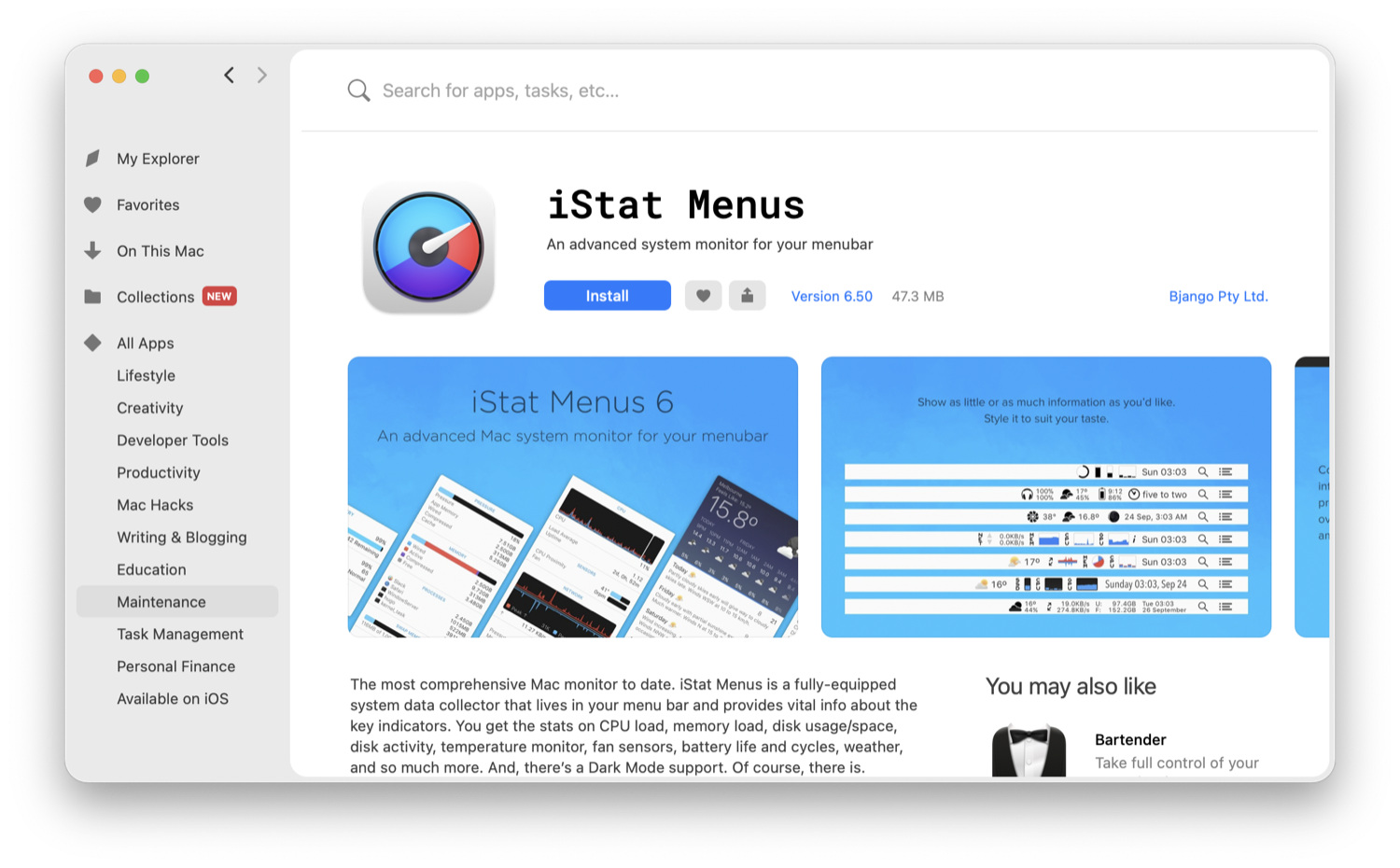
A more than Mac-similar example of a third-political party app store is Setapp. It'due south sort of similar a curated Netflix for apps – for a monthly fee, you become access to dozens of hand-picked apps. Installed apps are placed within /Applications/Setapp. Don't manually mess almost with these; use Setapp's interface for subsequent management.
Clear warnings when installing apps
When installing and launching apps, your Mac may brandish security warnings. For instance, when you download an app from the Cyberspace, your Mac will ask for confirmation earlier you run it the first time. (This assumes that in the Security & Privacy pane of Organization Preferences yous permit apps downloaded from identified developers. That is the default setting; it tin can be adjusted by clicking the lock, entering your admin password, and selecting the relevant radio button.)
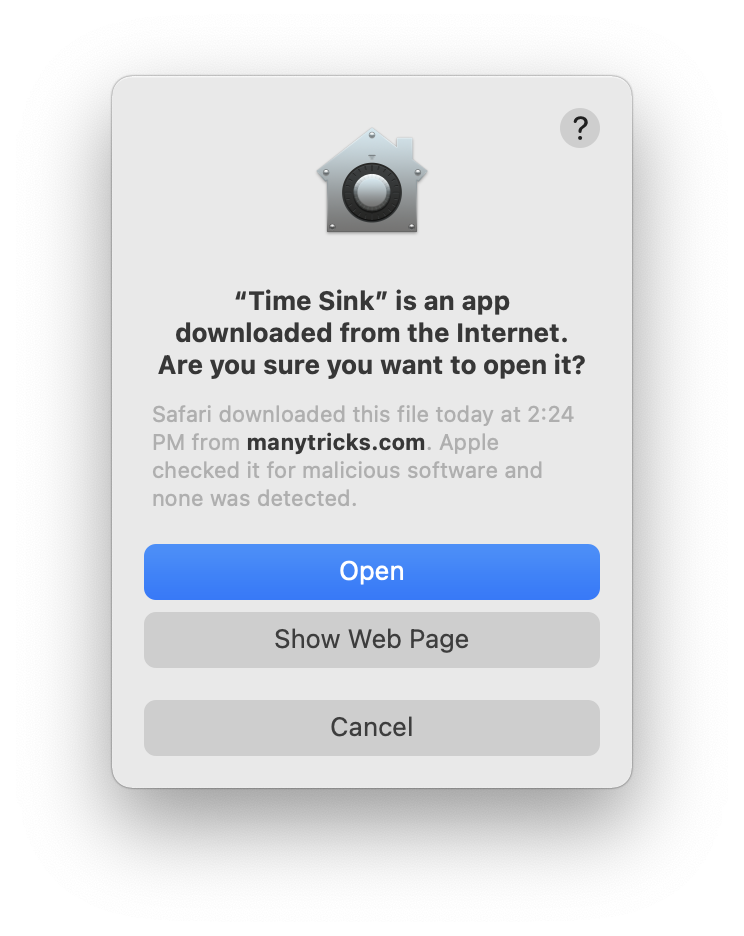
You may also get dialogs from apps, the first fourth dimension yous launch them, requesting access to things similar your Downloads folder, camera, microphone, and other elements.
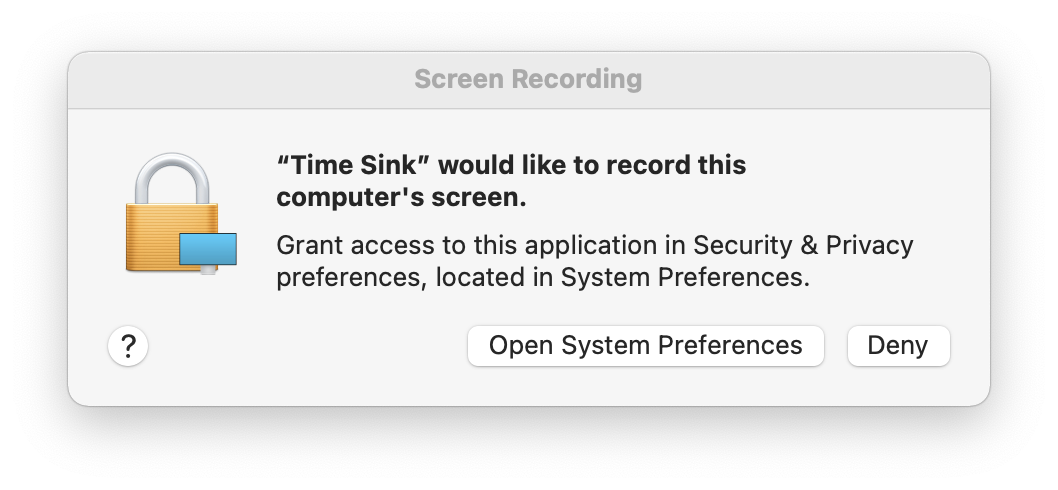
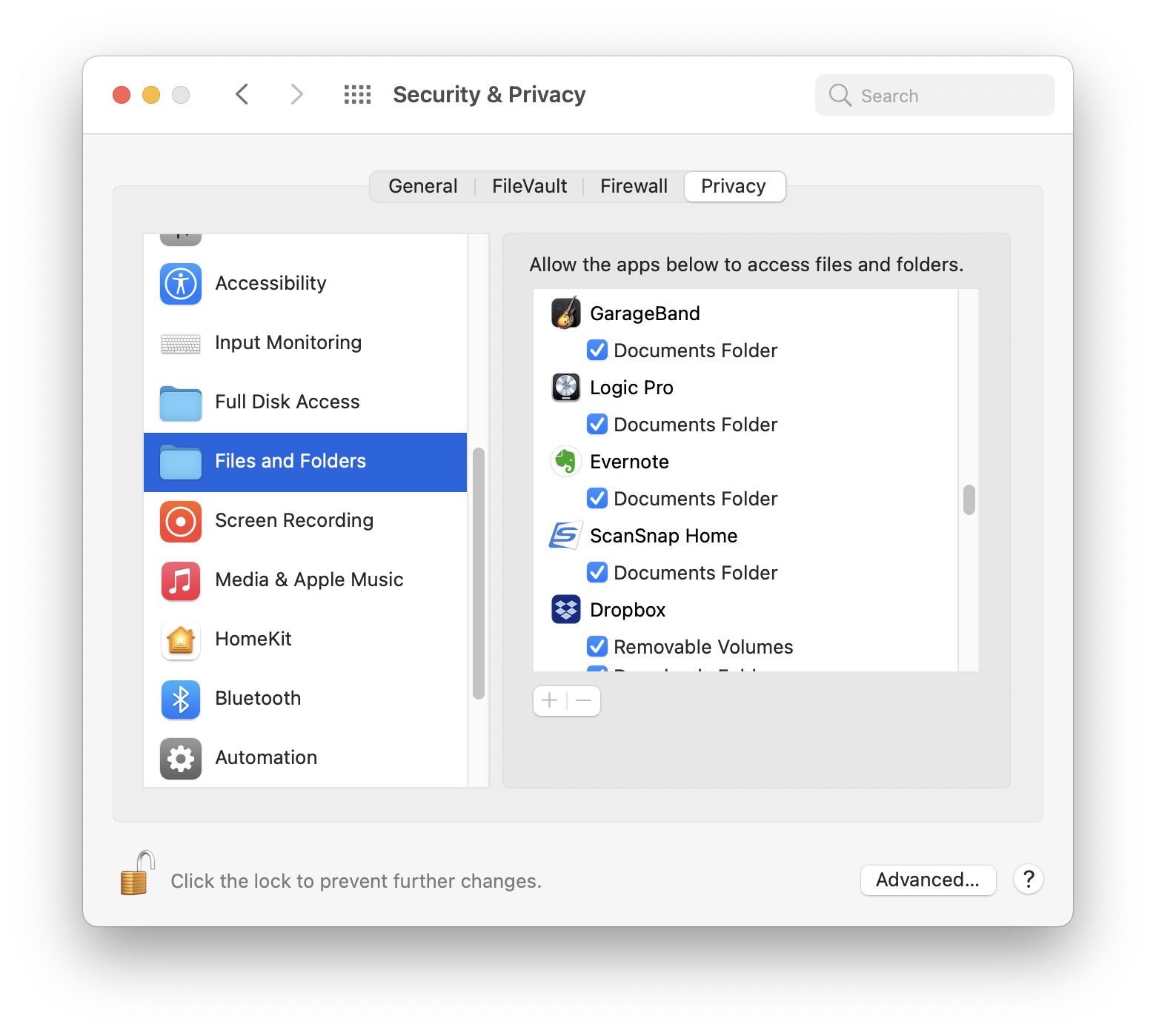
In some cases, such as granting access to your Downloads folder, you merely demand to click OK on a dialog. Simply in others, such as the case above, you accept get to System Preferences to explicitly grant permission. These settings are recorded in System Preferences > Privacy, and there is a whole cavalcade of areas where yous can grant or deny permission to apps. When granting permission, you need to click the padlock, enter your countersign, then bank check the appropriate boxes.
In the General pane of Organisation Preferences is a setting to permit apps downloaded from the App Shop, or from the App Store and identified developers. These latter are developers who have accounts with Apple tree, and sign their apps with an Apple-provided certificate, to ensure their provenance.
But there are times when yous may want to open up apps from unidentified develops. To do this, select the app in the Finder, right-click or Control-click, and so choose Open.
If yous try to open an app from an unidentified developer by double-clicking, you lot tin likewise open it past going to System Preferences > General, where at that place volition exist a button, nearly the bottom of the window, saying Open Anyway. Click this button to open up the app. The button is visible for well-nigh an hour later on you first launch the app.
Y'all won't need to do this later the starting time fourth dimension you launch an app; your Mac remembers your settings.
How can I larn more?
 Each week on the Intego Mac Podcast , Intego'southward Mac security experts talk over the latest Apple news, security and privacy stories, and offer practical communication on getting the most out of your Apple devices. Be sure to follow the podcast to brand sure you don't miss any episodes.
Y'all can also subscribe to our electronic mail newsletter and go on an eye here on Mac Security Web log for the latest Apple security and privacy news. And don't forget to follow Intego on your favorite social media channels: Facebook, Instagram, Twitter, and YouTube.

Almost Craig Grannell
Craig Grannell is a technology writer, mostly specialising in Macs, iOS, apps, and games. He's been immersed in all things Apple for over 20 years, and enamoured with computers since getting his easily on a VIC-20 as a kid. He also has a Korg Gadget addiction. Send help. Or alternatively, visit his website, craiggrannell.com, and follow him on Twitter at @craiggrannell. View all posts by Craig Grannell →How to Download Software on Mac Os X
Posted by: catherinetheaccer.blogspot.com

